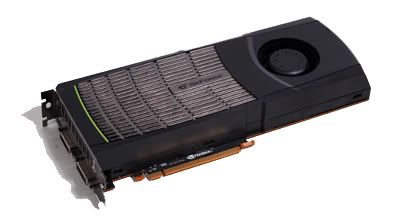
We know this has nothing to do with LEGO, but it has something to do with games - the hardware that powers games, in this case, on desktop computers. Over @
BrickTech, we've put up the latest news on
NVIDIA's flagship graphic card, the
GeForce 480, which comes from the new
GeForce 400 Series, driven by the new
GF100 GPU, called
Fermi.
With this card, NVIDIA is on par with it's rival
AMD, with their
ATI Radeon HD5000 Series. Both sides now have
DirectX 11 cards, which are supported on both Windows 6.1
(
Windows 7) as well as Windows 6.0 (
Vista), the latter via the
Platform Update.
DX 11 is supported in new and upcoming games, and throws in new features like
Tessellation (which was introduced in
DirectX 10.1 with
Vista Service Pack 1 and supported on
Radeon HD3000 and
4000). DX11 also introduces a new
Compute Shader which works with
Direct Compute, which is an implementation of
GPGPU, which allows games to use the card for processing, not just graphics. This comes in handy for
AI, physics calculation via NVIDIA's
PhysX, and real-time 3D
Ray-Tracing, via NVIDIA's
OptiX, which used to be a feature found in NVIDIA's
Quadro professional workstation video cards, but now can be used for games too.

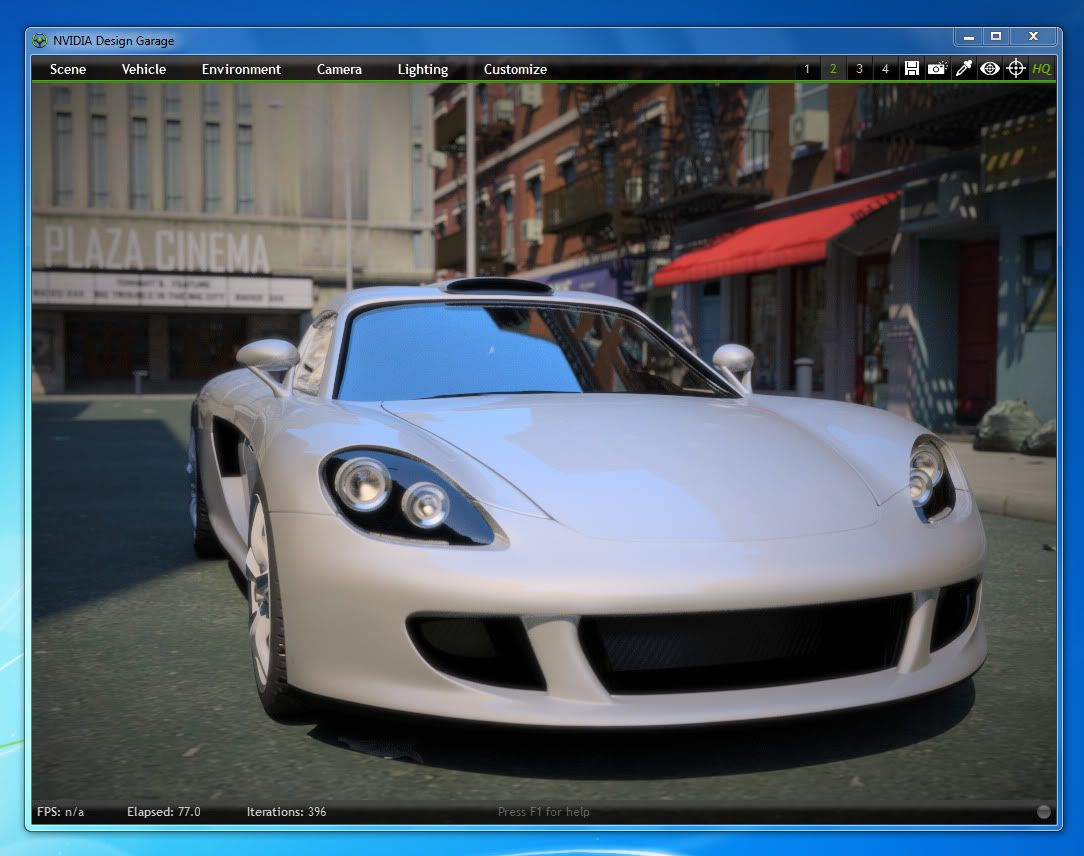
This is not a rendered 3D still image - it's a 3D motion rendering of a scene using NVIDIA's OptiX Quadro technology on the new GeForce 400 series of graphic cards. You can click on the image to view the full original size. Games can use this technology to have ray-traced 3D scenes.